• Skip to primary navigation
  • Skip to main content
  • Skip to primary sidebar

Supaproofread Blog

For Students, Researchers, Business Professionals and Writers

  • Home
  • Editing Services
    • Academic Editing
    • ESL English Editing
    • For Business
    • Academic Journals
    • Book Authors & Writers
    • Online Proofreading
  • About
  • Resources
  • Frequent Questions
  • Blog
  • Get In Touch

Archives for July 2008

Creating a Good Business Blog

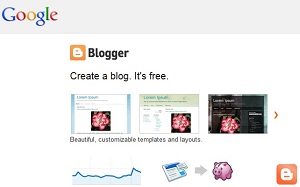
screenshot of blogger websiteBlogs are a great tool for building communities, interacting through them and even marketing the services you provide – they often produce both good and bad results. If you want to gain readership from your blog, you’ll have to be a bit more adventurous in the content you produce, have an easy design and market your blog.


What will kill readership?

What kills a good blog writer is their inability to address their target audience, this means that you have to be clear about the content. If you are not focused, you’ll confuse and lose readers. Grammar is the key in making your blog look professional and typos are another concern for bloggers. Even the most cautious writers have a slip here and there, and this really murders the entire blog.


Professional or Amateur?

What separates the professional from the amateur is the length of blog post, which should be ideally not too long, but just right. The attention span of most people won’t be for long, so keeping the posts short gets you a greater reader base. You also have to keep in mind that you are not just writing for a search engine, so emphasize those keywords, but keep the writing interesting as well. The mantra of getting results from your blog is to keep posting new content. Where most people fail is that they lose interest because it takes time and energy to keep a good blog going. So, keep posting and you will eventually get readers commenting the information you post.


The Design of the Blog

Another important feature of posting is to keep in mind the design of the blog. It is a crime not to have the name of the author in the tag line or somewhere in the blog, especially if it’s a business blog. Blogs without photographs are less visual because they do not enhance your credibility and a very important feature of blogging is the post title. Readers must be able to grasp the gist of an article by reading its headline. In fact, they should be allured by it. Avoid humorous headlines that make no sense and are non descriptive in nature. When you write you should also keep in mind that blog updates through RSS or email is very essential, so a subscription is important especially if it is a business blog. There should be a certain structure in the approach.


Use your full name

Using first names often confuses new readers, so it’s important for bloggers to keep in mind that there are new readers reading your blog, as well as people who have been reading your blog since you started writing it. A very essential feature of the web blog is to introduce a timeline – a calendar that reviews your posts in chronological order, this provides references to earlier blogs that readers have a choice to go and read. Remember, you can refer to a post you made two years ago, if you think it is relevant.


How to market your business blog

The marketing of a blog is a must for business bloggers, otherwise your blog may suffer the fate of hundreds of other blogs that are abandoned after several months, due to the lack of communication between the blogger and readers. What you’ll need to do is to submit the blog to blog directories and ping each time a new post is published.

This helps in maintaining communication with readers on a regular basis. Web blogs should also have a list of their favorite blogs or websites because this helps the readers in identifying with the blogger and the types of material he or she is interested in reading. This establishes in creating a one-to-one relationship between bloggers and each of its readers. So get started….and… blog….blog….blog… till you drop.

Filed Under: Business & Marketing, Websites & Business Tagged With: business writing, Internet, websites

Proofraeding is essential!

The caption above is enough to indicate why proofreading is indispensable! Let me share an interesting piece of information with you. You will notice that though a paragraph is full of errors, you catch the essence of the paragraph, and can still understand it. In order to understand what I am saying more clearly, have a look at the following sentence – “Proofraeding is extreemly essnetial.” Well, I am sure you understood what the sentence said, despite the order of the letters being wrong. This is possible as the first and last letters are in the right place, and that’s all our brain needs to process the letters correctly!

[Read more…] about Proofraeding is essential!

Filed Under: Resources Tagged With: proofreading, writing

Non-Fiction Writing: The Sins You Cannot Commit

One of the first mistakes that you have to look out for is the organization of your entire material. What is important here is that you are taking your readers on a trip through “the structure” – the beginning, middle and the end, if the reader cannot follow your reasoning and content, they will eventually give up. No one is going to have the patience to read something that doesn’t make a lot of sense or interest them. We can’t go on rambling now, can we?

To keep the attention of readers your use of the vocabulary is very important. A book is a two-dimensional medium, so it is up to the writer to deliver the words and to paint a picture that becomes three-dimensional in the reader’s mind; this is true even for a non-fictional book. Uninteresting words make you lose focus whilst reading the book, so your writing has to be cohesive and structured. The two most important better writing skills are the ability to begin your writing well, and to conclude it even better – lucidity of thought and expression is also very important.

Poor sentence structure and grammar, misspellings, incorrect abbreviations and capitalization all need to be reviewed, and if you make mistakes here, the reader may assume that your idea has errors too. The best way of making your writing an interesting read is by editing them over and over again until you are entirely satisfied with your work. Spending as much time as possible revising your work is a good idea. Once the first draft is complete, you’ll come to the most dreaded part many writers dislike in their writing, proofreading and revising your work.

With the advent of word processors, proofreading and editing your manuscript has become an important matter. Using cut and paste techniques, you can fine tune your writing in little time. It also pays to brush up your written language when you are writing, as what may sound right might not mean the same when written.

As a writer you cannot become over emotional with your own work, though you should allow readers to become emotional and attached. The more emotional the reader gets, the more effective the story will be in making your point. What is very important is that you cannot tell the reader how to feel about the events they are reading; rather, tell them how you feel.

One thing that has to be kept in mind is in the overuse of words and punctuation, in trying to communicate to the reader and tell them what you feel. If a chapter has more than two exclamation points then I think you are trying to over emphasise something that you feel. Another amateurish mistake is using capitals for all your written words, as this is the written equivalent of shouting. It is much more effective to talk softly.

The most important thing about writing a book is to understand it needs to be modular and unfolded over time. It is surprising how quickly you can create a book if you spend an hour each day working on it. At the end of the day, if your structure is basically sound, then you are left with simply writing one good sentence at a time, one good paragraph at a time, one good section at a time, until you are complete.

Filed Under: Advice for Authors and Writers Tagged With: book author

BOOK REVIEW: The Questions That One Needs To Answer

an suthors book, glasses and a mug of coffeeAn analytical or critical review of a book is not essentially its summary. It is a description and an evaluation on the quality and significance of the book, in light of specific issues and theoretical concerns. It should focus on the book’s purpose, content, and authority. It is a work where the strengths and weaknesses of the book are analysed. When writing a review, some questions have to be kept in mind.


Main Questions to Ask

These are as follows:

  • Is there a specific topic that the book deals with?
  • Does it seem to have any overall purpose?
  • For what readership is it written?

The preface, acknowledgements, bibliography and index is generally helpful in answering these questions. Do not overlook facts about the author’s background and the circumstances in which the book was created and published.


Also, think about asking:

  • Does the author state an explicit thesis or a theme?
  • What are the theoretical assumptions? Are they discussed explicitly?
  • From what point of view is the work written?
  • Why did the author write on this subject rather than on some other subject?

Again, look for statements in the preface, etc. and follow them up in the rest of the work.


The Genre and Material

  • Is there a genre that the book can be categorised into?
  • How does the book fit into it?

What types of material does the work present itself as (e.g. primary documents, literary analysis, personal observation, biographical or historical accounts).


The Author’s Style

  • What is the style of the author?
  • Does he/she have a formal or an informal approach?

Evaluate the quality of the writing style and tone by using some of the following standards: clarity, originality, correct use of technical words, conciseness, fullness of development, fluidity.

The Audience/ Readers

  • Does it suit the intended audience?
  • What do you like or dislike about the book’s writing style?
  • Is the book readable as well as technically accurate? Is the language stilted, or natural?
  • Are the examples easy to follow?
  • How well is the book organized?


Materials and Sources

  • Are there other ways to argue from the same material?
  • Does the author show awareness of them?
  • In what respects does the author agree or disagree?
  • What theoretical issues and topics for further discussion does the work raise?


The Affect of the Book on You

  • Did the book affect you at all?
  • If it did, then how did you cope with it?
  • Did you have any preconceived notions of the topic?
  • Did it change after you read this book?
  • How is the book related to your own personal agenda?
  • What are your own reactions and considered opinions regarding the work?
  • How well has the book achieved its goal?
  • Would you recommend this book to others, and why?


The above mentioned questions will help in structuring the way you want your review to take shape. What it can also do is to open a new insight into the book that you are writing on. So keep them in mind and go ahead writing reviews on your favourite books.

Filed Under: Advice for Authors and Writers Tagged With: book author, Freelance Writing

Having Fun in Your Life? Bring it Out in Your Writing!

Just a few days ago, I was watching a standup comedy show and I couldn’t stop laughing for a long time. It made me wonder what was so exceptionally funny with the show. While the standup comedian was mostly cracking one-liner jokes, his strength laid in the real life comic stories that he narrated and enacted. He narrated many funny stories about his family, friends, people on the street, and even his neighbor’s dog! If real life stories sound funny in comedy shows, they sound even funnier when written, especially if they’re written with a sense of humor.

[Read more…] about Having Fun in Your Life? Bring it Out in Your Writing!

Filed Under: Resources Tagged With: writing

Primary Sidebar

Recent articles we’ve written

  • 10 Reasons Why You Should Study in the UK
  • Common Mistakes in Written English
  • What is Proofreading?
  • Managing Your Dissertation Time Through the Summer
  • Dissertation Proofreading and Editing Explained

Topics we write about

  • Advice for Authors and Writers
  • Business & Marketing
  • Common Mistakes
  • Freelance Writing
  • Resources
  • Student Writing Advice
  • Top Tips in Writing
  • Websites & Business

Other sites we like

  • UoY's Academic Integrity Guide
  • Wikipedia's Manual of Spelling

Search for your own

book author business writing Freelance Writing Internet proofreader proofreading student life student writing uk study websites writer writing writing advice writing tips

Copyright © 2026 · Supaproofread.com · Privacy notice